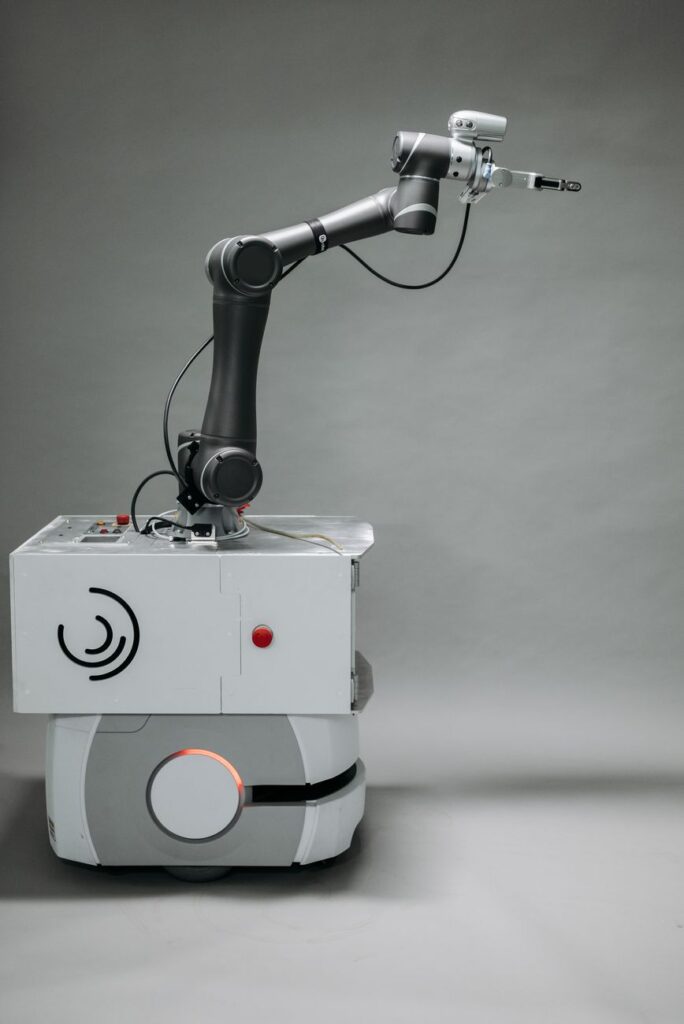
Modern factories don’t run on gears and conveyor belts alone anymore. Behind every smooth production line, smart robot, and predictive maintenance alert is a set of powerful AI industrial automation tools quietly doing the heavy lifting. Whether you’re managing a mid-sized plant or planning a digital transformation, getting the best AI industrial automation tools overview can feel overwhelming with so many options floating around.
This guide breaks down what really matters: which tools deliver real ROI, how they work, and where to start. Let’s dive in.
Why AI Industrial Automation Is Reshaping Manufacturing
AI-powered automation isn’t just a trend, it’s becoming the backbone of modern operations. According to McKinsey, companies adopting AI-driven automation see up to a 20% increase in productivity and a 15% cut in operational costs within the first year.
The shift isn’t only about replacing manual labor with machines. It’s about giving those machines the ability to learn, adapt, and make decisions. Here’s the thing most people miss: the real value lies in combining human expertise with machine intelligence.
- Real-time decision making – AI processes sensor data instantly
- Predictive maintenance – Anticipating failures before they happen
- Quality control – Catching defects faster than ever
- Supply chain optimization – Adjusting orders based on demand forecasts
li>
Choosing the Right Tool Stack
Selecting the right tools starts with understanding your pain points:
- Are frequent machine breakdowns costing downtime?
- Is quality inconsistency affecting customer trust?
- Are you struggling to scale without adding headcount?
Once you’ve mapped out your biggest challenges, match them with platforms designed to solve those exact problems.
Top Picks for Best AI Industrial Automation Tools Overview
Let’s walk through the top contenders in the game today. These aren’t just marketing buzzwords, they’re battle-tested solutions used by leading manufacturers worldwide.
### 1. Siemens Xcelerator
If you want a holistic platform, Siemens Xcelerator delivers end-to-end support from design to deployment. It uses digital twins and edge computing to simulate production scenarios in real time.
As an AI specialist, I appreciate how seamlessly it integrates legacy systems with cloud-native applications. This makes scaling easier without ripping off old infrastructure.
### 2. Rockwell Automation FactoryTalk InnovationSuite
Built for flexibility, Rockwell’s suite offers modular components tailored to different industries. You can pick analytics modules separately from control systems and still maintain seamless integration.
What stands out? Its no-code environment lets engineers build workflows visually instead of coding everything manually. That saves weeks if you’re iterating quickly.
### 3. Uptake Technologies
Specializing in predictive analytics, Uptake excels when your goal is minimizing unplanned downtime. Their AI models analyze equipment telemetry and flag anomalies early.
A recent case study showed a chemical manufacturer reduced reactive maintenance by 40%. That’s significant ROI in safety-critical environments.
### 4. Cognite
Great for organizations drowning in data silos, Cognite builds contextualized data models across OT and IT sources. Once connected, users gain unified insights into operations performance.
It supports open standards, meaning fewer vendor lock-ins and more freedom during upgrades.
### 5. PTC ThingWorx
ThingWorx shines in IIoT (Industrial Internet of Things) deployments. With drag-and-drop app development tools, even non-developers can prototype AR-based monitoring dashboards.
This is where it gets interesting: PTC combines augmented reality with AI to help frontline workers troubleshoot issues visually.
Selecting Based on Your Maturity Stage
Not all businesses are ready for enterprise-grade platforms. Match your choice to your current stage:
- Beginner – Start with platforms offering guided setup wizards
- Intermediate – Look for customizable dashboards with API access
- Advanced – Prioritize interoperability and advanced ML capabilities
Implementing AI Industrial Automation: Key Considerations
Choosing a tool is half the battle. Implementing it successfully requires careful planning and change management.
Here’s what experts recommend:
- Start small – Pilot with one production line or process area
- Ensure data readiness – Clean, labeled historical data fuels better predictions
- Train staff – Upskill operators to collaborate effectively with AI systems
- Monitor continuously – Evaluate performance metrics monthly, not quarterly
“The biggest mistake companies make is treating AI like a magic fix,” says Dr. Lena Park, Senior Analyst at Gartner. “Success comes from aligning AI goals with clear business outcomes and involving field teams throughout implementation.”
Measuring Success After Deployment
ROI doesn’t always show up overnight. To track progress meaningfully, define KPIs tied directly to your objectives.
For example:
- Defect reduction rate
- Energy consumption efficiency
- Mean time between failures (MTBF)
- Worker satisfaction scores post-training
Regularly reviewing these numbers helps refine your approach and justify future investments.
Frequently Asked Questions About Best AI Industrial Automation Tools Overview
What are the simplest AI automation tools for beginners?
Platforms like Cognite, ThingWorx, and Rockwell FactoryTalk offer low-code interfaces ideal for newcomers. They simplify complexity while delivering tangible value quickly.
Do I need data scientists to deploy these tools?
Not necessarily. Many vendors now include pre-trained AI models and self-service analytics. For deeper customization, though, having some technical support pays off.
Can I use AI automation with older machinery?
Absolutely. Edge devices and retrofit sensors allow legacy equipment to feed data into modern AI pipelines. It’s a cost-effective way to upgrade without full replacement.
How long does it take to see results?
Typically within 60–90 days for basic implementations. Complex multi-site rollouts may take several months but yield greater returns over time.
Final Thoughts
Getting the best AI industrial automation tools overview means focusing less on hyped features and more on solving real operational challenges. Whether you’re optimizing energy usage, predicting failures, or improving worker safety, there’s a tailored solution waiting for you.
To recap:
- Identify pain points and map them to proven use cases
- Pick scalable platforms that grow with your maturity level
- Invest in training and continuous improvement post-deployment
Want to explore how AI can transform your facility? Drop your questions below or reach out for a personalized consultation.
—
/* Basic inline styles for readability */
body { font-family: Arial, sans-serif; line-height: 1.6; }
img { width: 100%; height: auto; display: block; margin: 20px 0; }
ul, ol { margin-left: 20px;
Related AI Guides & Workflows in AI Automation for Industries
- 7 Best AI Industrial Automation Tools Overview: Boost Your ROI
- Best AI Industrial Automation Tools Overview: Top Picks for Smarter Workflows
- 7 Best AI Industrial Automation Tools Overview: Transform Your Factory
- Explore more guides in our AI Automation for Industries Knowledge Hub or copy ready-to-use workflows from our Verified AI Tools & Scientific Prompts Directory.
Additional industry benchmarks and technical documentation can be reviewed via Make.com Enterprise Automation Blueprints.